
Some artists leave behind paintings. Olive Rush left behind a place.
Visitors entering the adobe compound at 630 Canyon Road discover more than the former home of a respected painter. They find a working studio, leafy courtyards, fruit trees, hand-painted details, and a property that still feels shaped by the person who lived there for more than half a century. Preserved today as the Olive Rush Historic Artist Home & Garden, it offers an unusually intimate glimpse into the life of an artist who prized simplicity, hospitality, and quiet creativity. According to the Olive Rush Foundation, the property remains much as Rush intended it: a place where art and everyday life naturally intertwine.
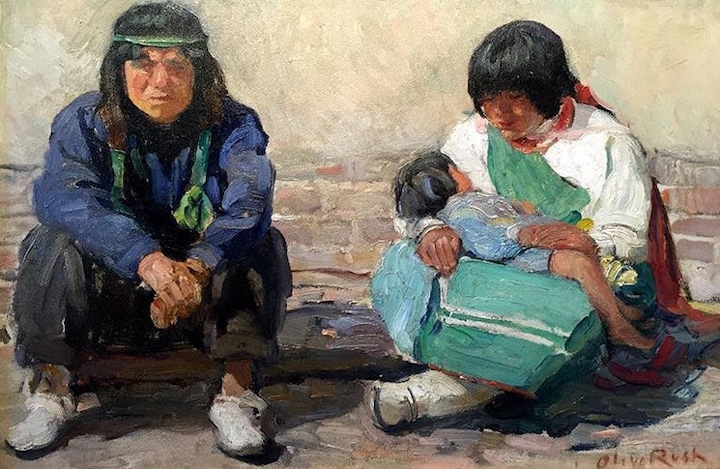
Born in Indiana in 1873, Rush grew up on a Quaker farm surrounded by orchards, fields, and the rhythms of rural life. Those early years fostered a lifelong appreciation for nature and reflection. After studying art in the Midwest and on the East Coast, working as an illustrator, and traveling in Europe, Rush first visited the Southwest in 1914. The experience proved unforgettable. In 1920, at the age of 47, Rush settled permanently in Santa Fe, where the landscape, architecture, and cultural traditions inspired the rest of a long artistic career.
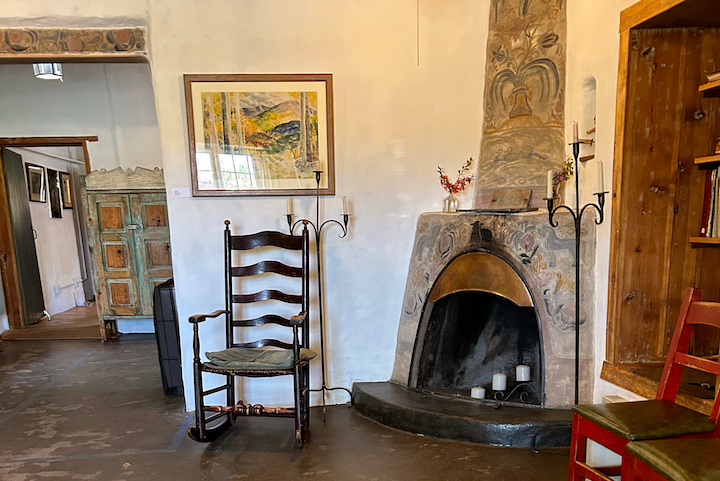
Her Canyon Road residence reflected the same thoughtful spirit that appeared in her paintings. The adobe house was expanded over time to include a spacious studio filled with northern light, while a converted goat shed became guest accommodations that welcomed fellow artists. Walls, cupboards, and furniture carried decorative painting and frescoes, turning ordinary spaces into expressions of imagination. Even a small sign offered visitors a gentle clue about where they were likely to find the artist: “You will find me in the garden.”
The grounds became an extension of the studio. Mature apple trees shaded vegetables, grapevines, flowers, shrubs, and fruit trees that filled the air with earthy fragrances through much of the growing season. Brick pathways wound between beds of greenery, while the outdoor horno often became the center of gatherings with friends. Rush delighted in watching visitors enter through the back gate and pause to admire the abundance around them before conversation drifted beneath the trees.
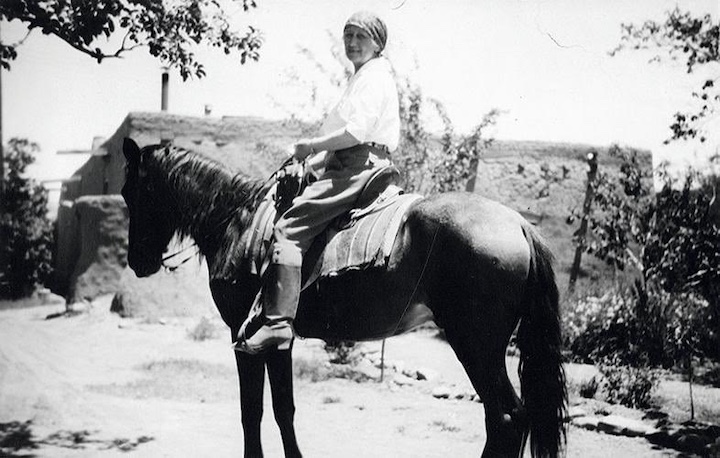
The property held other surprises. A horse named Pedro lived in the stable, and Rush sometimes rode through Santa Fe on horseback. The setting reflected an independence that never called attention to itself. Rather than separating work from daily life, Rush folded painting, gardening, entertaining, and quiet reflection into a single rhythm.
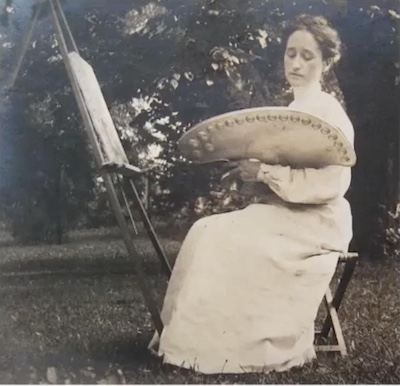
Although reserved by temperament, Rush welcomed a steady stream of visitors. Artists, musicians, writers, neighbors, and friends gathered for teas, meals, celebrations, and conversation. The house became an informal meeting place where ideas were exchanged as readily as recipes or stories. Rush believed artists were “spiritual adventurers,” and those who spent time there found a home that encouraged both creativity and fellowship.
Her own work continued to evolve after arriving in New Mexico. Southwestern landscapes, Indigenous artistic traditions, Asian brush painting, and Quaker beliefs all found their way into paintings that emphasized harmony, balance, and spiritual expression over literal representation. Rush also became an accomplished fresco and mural painter, completing commissions for schools, churches, public buildings, and private homes. She encouraged Indigenous artists by sharing mural techniques, offering thoughtful criticism, and opening her home as a place where artistic traditions could meet with mutual respect.
Late in life, Rush arranged for the property to continue serving the community after her death. Today, the Olive Rush Historic Artist Home & Garden welcomes visitors for tours, exhibitions, concerts, educational programs, and seasonal events. The studio still conveys the atmosphere in which Rush worked, while the orchard and gardens invite visitors to slow their pace and look a little more closely.
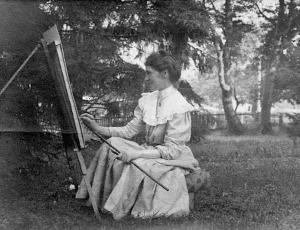
It is fitting that one of Santa Fe’s most distinctive artists is remembered not only through paintings, but through a place where sunlight still falls across adobe walls, leaves stir overhead, and creativity seems as much a part of the landscape as the trees themselves.
Brian D’Ambrosio is the author of New Mexico Eccentrics and American Eccentrics, Mavericks, Misfits, and Visionaries. New Mexico Eccentrics: D’Ambrosio, Brian: 9781257192625: Amazon.com: Books


